First Scientific Director
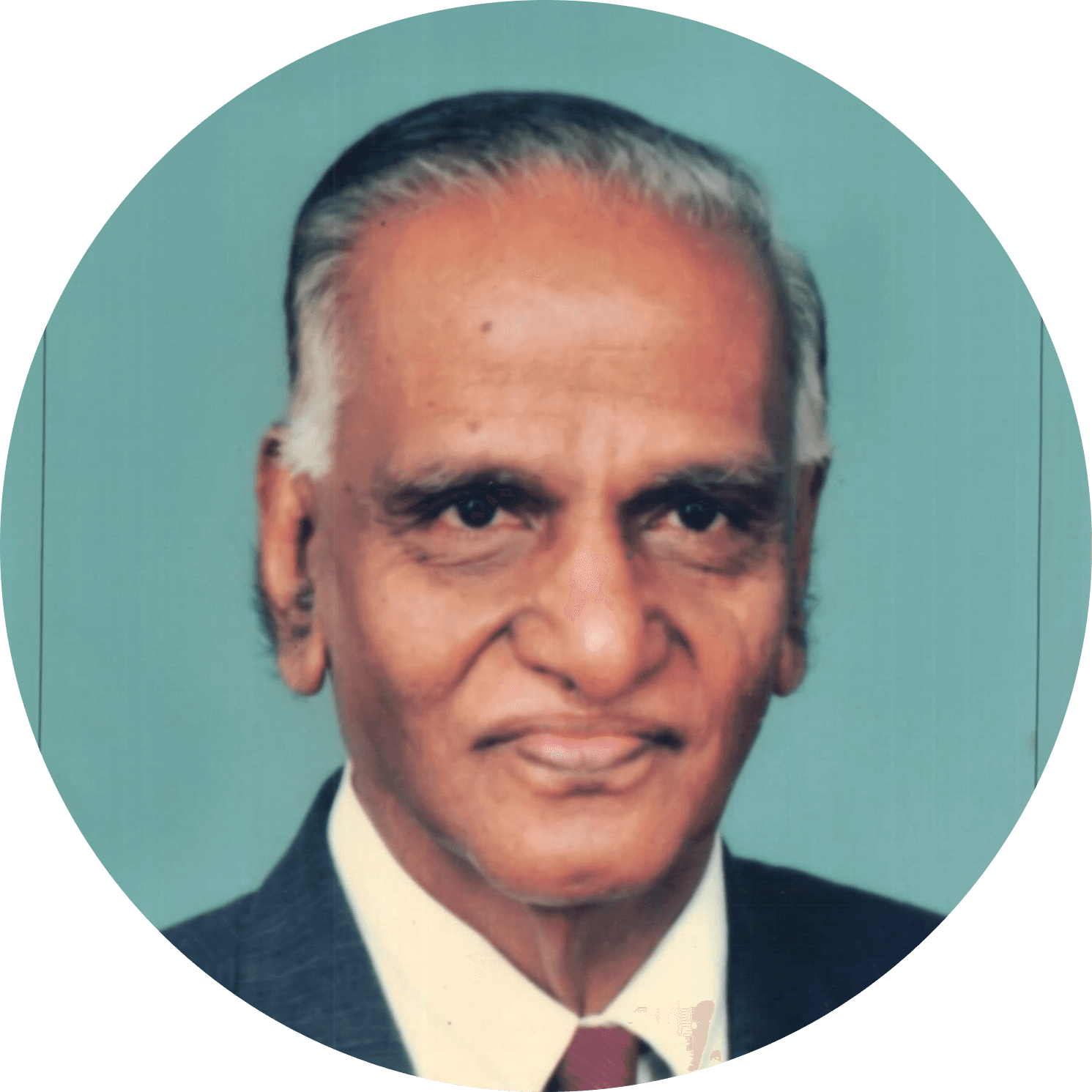
Dr. S. Krishnamurthi
The Architect of Indian Oncology
1919 – 2010
“A patient with curable cancer should not be denied treatment for lack of money.”
The Beginning
Son of a legend. Destined to become one himself.
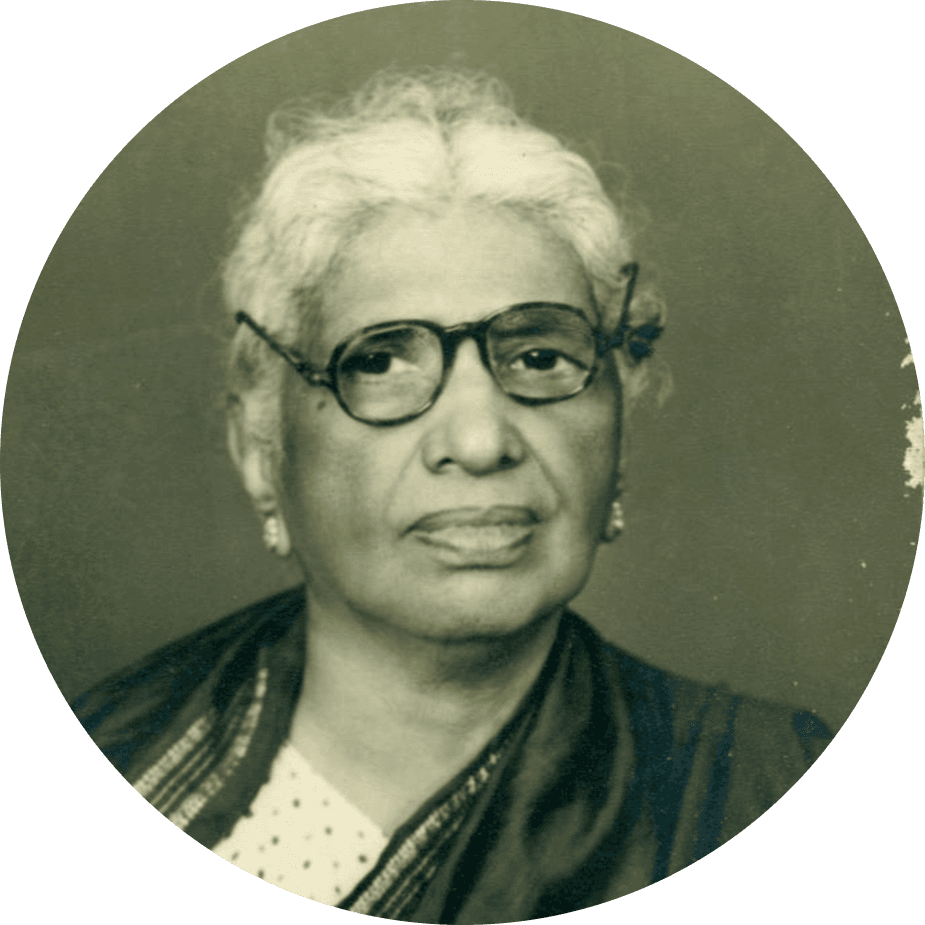
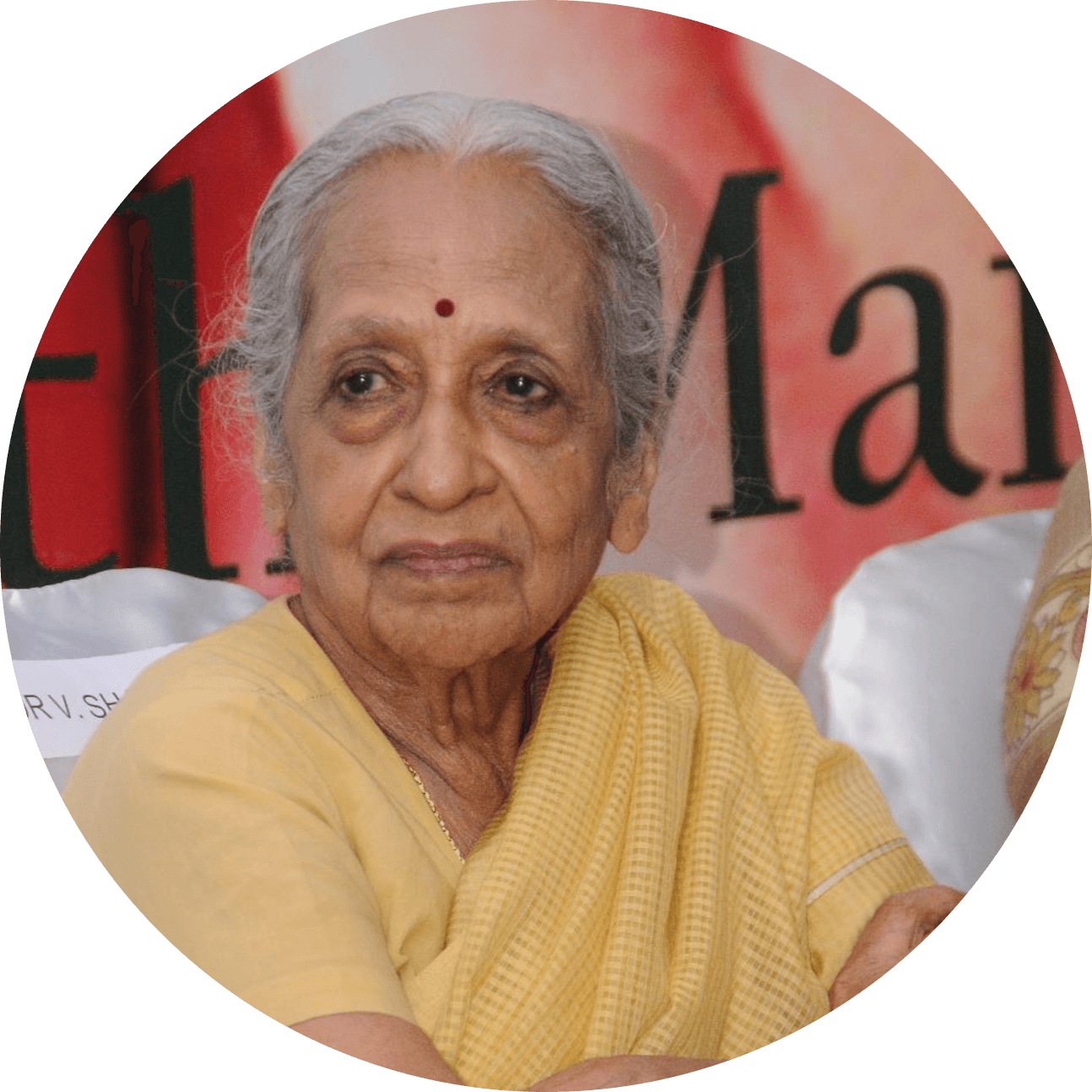
On September 12, 1919, Sundara Krishnamurthi was born to two of the most remarkable people in India: Dr. Sundara Reddy, a physician, and Dr. Muthulakshmi Reddy, India's first woman medical graduate, its first woman legislator, and the visionary who would one day found the Cancer Institute (WIA). Growing up in that household was not merely an education in medicine. It was an education in what medicine was for.
His mother had watched her younger sister die of advanced rectal cancer, a disease that colonial India called karma vyadhi — the disease of destiny — as if suffering were something people deserved. Dr. Muthulakshmi refused that idea for the rest of her life. Her son inherited the refusal.
He completed his MBBS in 1942 and his MS in 1946. Then, in 1947, his mother sent him abroad. Not as a reward. As a mission. She wanted him to return with the knowledge that did not yet exist in India, so that the cancer hospital she was already planning could have someone who knew exactly what it needed to do.
“In a nation where a large majority speaks of Gandhian values but hardly a handful practices it, the significance of his life and work are monumental.”
Tribute, Indian Journal of Surgical Oncology, 2011
He trained as a Fellow at the Ellis Fischel State Cancer Hospital in Missouri, USA, and later at the Royal Cancer Hospital in London. He did not go to study in the abstract. He went to learn how to fight a specific disease for a specific country's patients.
A Life of Scientific Firsts
What he brought to India that India did not yet have.
Joined his mother's institute at its founding as its first RMO and Scientific Director. Two doctors, twelve beds, and a conviction that cancer was curable. He began changing public perception of the disease from that first day.
Established the country's first nuclear medicine department at the Cancer Institute, introducing radioactive isotopes into diagnosis and treatment at a time when this was entirely new to Indian medicine.
Secured the Eldorado-A cobalt-60 unit, a gift from Atomic Energy of Canada Limited, making the Cancer Institute the first in all of South and Southeast Asia to enter the supervoltage era of radiotherapy. He personally petitioned Jawaharlal Nehru to waive customs duty on the import.
On his representation to the Union Ministry, railway travel concessions were extended to all cancer patients in India. A single letter changed the lives of patients who could not afford to come back for follow-up care.
Introduced combined modality treatment for oral cancer, integrating surgery, radiation, and chemotherapy at a time when most centres still treated these as separate options. This approach was declared an “innovative advance” in the International Year Book of Cancer, 1964.
Took over as Director, a role he held until 1980. Under his directorship, the institute grew from twelve beds to a nationally recognised regional cancer centre, building research, education, and clinical care simultaneously.
Founded the country's first dedicated unit for childhood cancers, recognising before almost anyone else in India that children with cancer needed specialist care tailored to their biology and to their lives.
Was the first in India to treat patients with radiation before surgery in breast cancer. This was a paradigm shift in the management of large tumours, and it would go on to become a standard of care worldwide.
Conducted the Chenglepet Cancer Survey, the first opportunistic cancer screening programme in the country, taking cancer detection out of the hospital and into the community for the very first time.
Awarded India's fourth-highest civilian honour in recognition of his pioneering contributions to cancer science, education, and patient care across more than two decades of work.
After a decade of persistent effort, he introduced the MCh in Surgical Oncology and DM in Medical Oncology at the Cancer Institute, the first such super-specialty qualifications in India recognised by the Medical Council. This created the very discipline of oncology as a distinct medical specialty in the country.
Appointed Honorary Surgeon to the President of India, a position he held until 1992, a formal recognition of his standing as one of the foremost surgeons in the country.
What He Built
From huts to a hemisphere of cancer science.
When Dr. Krishnamurthi arrived in 1954, the Cancer Institute had no proper diagnostic equipment, no radiotherapy unit, no chemotherapy protocols, no training programmes, and no precedent to follow. He did not wait for precedent. He set it. Within three years, the institute had Asia's first cobalt-60 unit and India's first nuclear medicine department. Within six years, it had the country's first paediatric oncology unit. Within a decade, it was publishing research in international journals and being cited in global oncology yearbooks.
His case records from the late 1950s and early 1960s, reviewed by colleagues who came after him, were described as examples of such meticulous clarity and accountability that they were almost impossible to match. He insisted on thoroughness not as a bureaucratic exercise but as a moral one. Every patient documented was a patient whose story mattered.
He was a teacher who poured himself into his students without ego. His farewell message to the generations trained at the institute carried a generosity that colleagues have never forgotten: “If you start where I started you are likely to end where I ended, which would be self-defeating. Do not start where I started. Progress to reach greater heights.” In a field where mentors guard their knowledge, he gave his away.
He sat in a hospital room in his final weeks with the air conditioning switched off in the May heat. On his wall was a photograph of a young Dr. Shanta, his colleague of fifty years. He told the journalist who interviewed him that he was satisfied she had won the Magsaysay Award rather than him. That was who he was.
“If you start where I started you are likely to end where I ended, which would be self-defeating. Progress to reach greater heights.”
The Man Behind the Science
He gave everything. He kept nothing back for himself.
Dr. Krishnamurthi belonged to a tradition of medicine that is difficult to find now. He was a Gandhian. He and his mother were both followers of Gandhi, not in sentiment but in practice. He lived modestly, worked without the expectation of public recognition, and consistently pushed his colleague Dr. Shanta to take the front stage while he remained in the background. He was not diminished by her success. He was glad of it.
He used to insist on something that his students carried with them for the rest of their careers: if a patient had no one else to take care of them, the doctor must. Not as policy. As responsibility. As the minimum condition of calling yourself a physician. He documented his own mistakes with the same clarity he brought to his successes, once writing “wrong selection of case by surgeon” in a patient's notes, a confession that colleagues described as requiring more courage than most doctors ever show.
He lectured without notes, drawing on a depth of clinical knowledge that left generations of students in awe. His impromptu lectures on basic oncology were described as extraordinary. He had over 70 publications in scientific journals. He served on WHO committees for seventeen years. He was an Honorary Surgeon to the President of India. And yet the photograph on his hospital wall in his final days was not of prizes or certificates. It was of his young colleague, the person whose success he had helped make possible.
He passed away on July 3, 2010. The campus he helped build from a cluster of huts now bears his name. The Dr. S. Krishnamurthi Campus stands alongside the Dr. V. Shanta Campus in Adyar, a permanent testament to a partnership that lasted half a century and changed the face of cancer care in India.
Recognition
Honoured by India. Remembered by every patient he refused to give up on.
Padma Shri, 1970
India's fourth-highest civilian award, recognising sixteen years of scientific leadership that had already placed the Cancer Institute (WIA) among the leading oncology centres in Asia.
Honorary Surgeon to the President of India
Appointed 1987, a position he held until 1992. A formal acknowledgment of his standing at the summit of Indian surgical medicine.
Lifetime Achievement Award, Indian Society of Oncology
Awarded by the professional body of the field he built, for a body of work that no single award could adequately measure.
WHO Committees, 1965 to 1982
For seventeen years, served on one or more committees of the World Health Organization, bringing the experience of cancer care in India's context to global health policy.
The Dr. S. Krishnamurthi Campus
One of the two campuses of Cancer Institute (WIA) in Adyar bears his name. The institution he helped build from a hut is, in the most literal sense, his monument.
The Discipline He Created
Oncology as a distinct medical specialty in India exists because he spent a decade fighting to establish it. Every oncologist trained in India inherits something from that fight.
He built the science. He trained the scientists. Then he told them to go further.
He returned from America and Britain with knowledge that India did not yet have. He found corruption and walked away from it. He found his mother's huts in Adyar and stayed. He installed Asia's first cobalt machine, founded India's first nuclear medicine department, introduced multimodal therapy before the world had named it that, and created the very qualification that defines an oncologist in India today.
He did all of this without seeking the limelight. He sat in a warm room in his final weeks, proud that his colleague had won the prize he never claimed for himself. He was not a man who needed monuments. He needed patients to be treated. He needed doctors to be trained. He needed cancer to be beatable.
Every patient who survives a cancer in India, every oncologist who trained in a super-specialty programme, every child who received care in a paediatric oncology unit, every person who travelled to follow-up care on a subsidised train ticket, carries something of what he gave.