Director & Chairman, Cancer Institute (WIA)
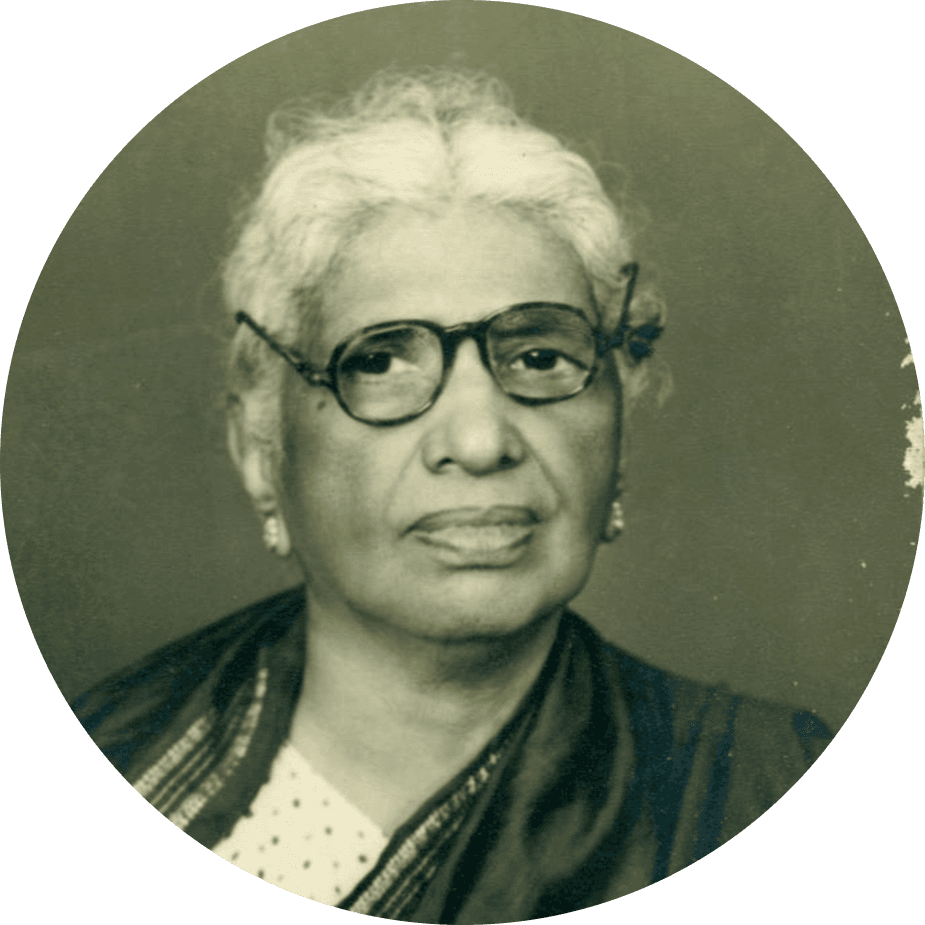
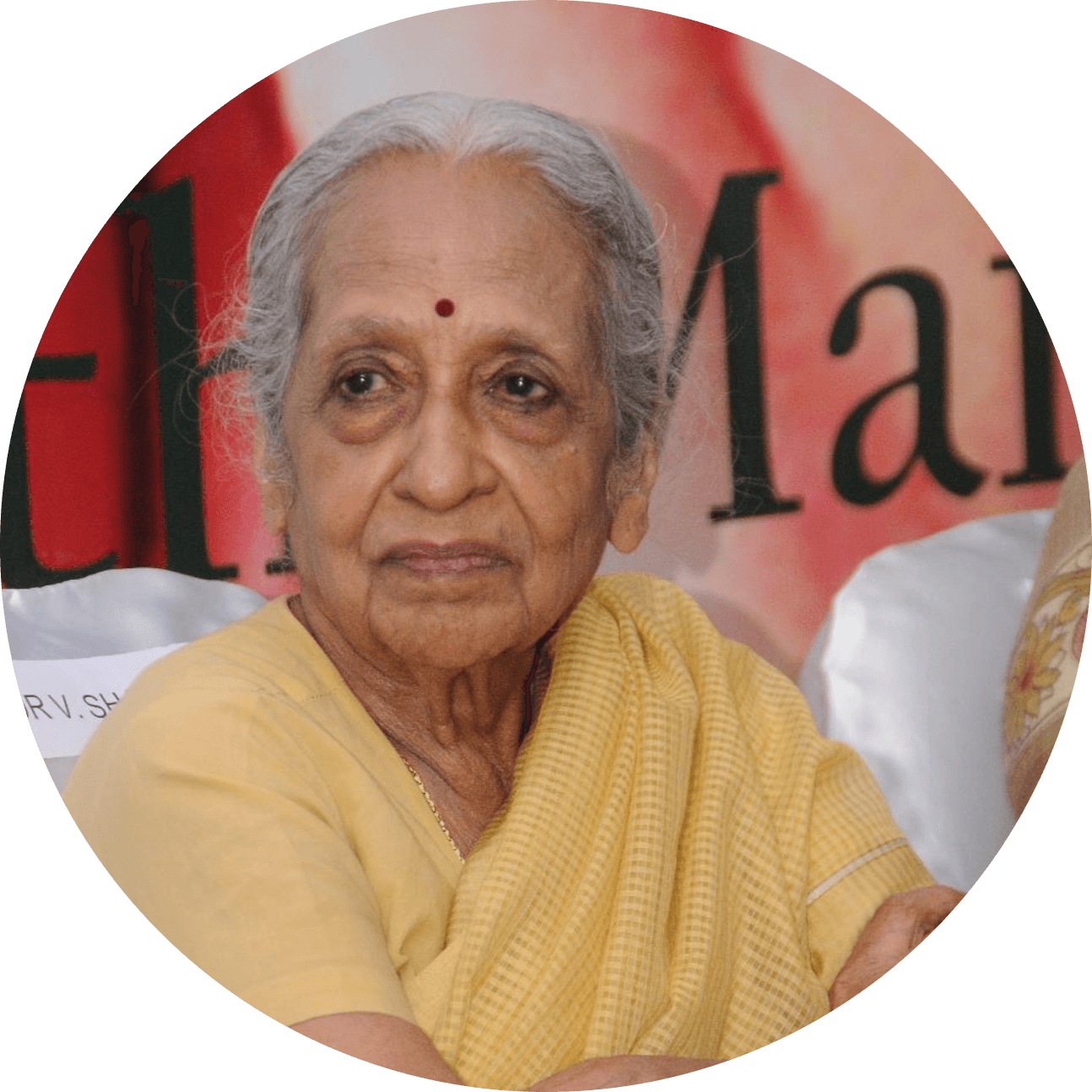
Dr. V. Shanta
The Mother of Oncology in India
1927 – 2021
“Fear not cancer diagnosis, but its delay.”
The Beginning
Born into a family of Nobel Laureates. She chose a different kind of greatness.
On March 11, 1927, in Mylapore, Chennai, Viswanathan Shanta was born into a family that carried the weight of extraordinary minds. Her grand uncle was Sir C. V. Raman, the only Asian to win the Nobel Prize in Physics. Her maternal uncle was Subrahmanyan Chandrasekhar, the astrophysicist who would go on to win the Nobel Prize in 1983. Science ran through her blood. But the path she chose was her own.
By the age of twelve, she had made up her mind: she would become a doctor. She studied at Madras Medical College and earned her MBBS in 1949, her DGO in 1952, and her MD in Obstetrics and Gynecology in 1955. The conventional path for a woman of her calibre and era was clear: gynecology, a government posting, a secure career.
She did not take the conventional path.
“I jumped at the opportunity and joined the Institute. It was truly a turning point in my career, made possible by the indomitable courage of Dr. Muthulakshmi Reddy. She was a legend in her lifetime.”
Dr. V. Shanta, ASCO Post, 2019
As a student, she had witnessed a cancer specialist dismiss a dying patient with the words: “Pass the case on to better surgeons.” She was dumbfounded. That moment planted a seed that would grow into sixty-five years of defiance against cancer's cruelty.
Six Decades of Firsts
What she built, year after year.
Moved onto the campus on April 13, 1955. One of only two doctors. Worked voluntarily for a year. Made it her home, her mission, her entire world.
Led India's first successful trials of combination cancer therapy, achieving a dramatic breakthrough in the treatment of oral cancer. Published findings in international journals and placed the institute on the global oncology map.
Under her scientific leadership, the Cancer Institute (WIA) became the first in South India recognised as a Regional Cancer Centre by the Government of India, a designation that unlocked national resources and credibility.
Appointed Director, a position she held until 1997. She built international partnerships in Europe, North America, and Japan and equipped the institute with state-of-the-art research and imaging facilities. The 12-bed hut was becoming a world-class institution.
Established one of the most rigorous cancer data registries in Asia. She believed you cannot fight what you cannot measure. This registry, maintained to this day, feeds into national cancer policy and WHO global data on cancer incidence and survival.
Under her leadership, the institute launched India's first postgraduate oncology degrees recognised by the Medical Council of India, creating a pipeline of specialists where none had existed.
India's fourth-highest civilian honour, awarded in recognition of her growing national contribution to cancer medicine and public health policy.
Recognised that cancer runs in families and that families deserved to know. Opened India's first dedicated hereditary cancer clinic, offering genetic counselling and early screening to those at highest risk.
Asia's most prestigious prize, often called the Asian Nobel. The citation noted that the institute under her care provided free or subsidised treatment to 60% of its 100,000 annual patients. She dedicated the award entirely to the institute.
India's third and second highest civilian honours, awarded a decade apart for a life of expanding, deepening, and unrelenting service. She was 89 when the Padma Vibhushan reached her hands.
What She Built
From twelve beds in a hut to a world-class institution.
When Dr. Shanta arrived in 1955, the Cancer Institute had twelve beds, minimal infrastructure, and an ethos that felt almost impractical for the time: treat everyone, regardless of what they can pay. She did not question the ethos. She built around it. She raised donations. She argued with governments. She wrote letters to corporates seeking funds on the very last day of her life, at 93, her secretary by her side.
She introduced chemotherapy and radiation therapy to India. She tailored treatment protocols specifically for Indian patients, whose biology, access to care, and presentation of disease often differed from Western counterparts. She pioneered cervical cancer screening in rural districts, training local health workers to take Pap smears and identify abnormalities. She established the Tamil Nadu Cancer Registry Project, the largest population-based cancer registry in the world by the population it covers.
She started India's first paediatric oncology department. Because children were getting cancer too, and they had no one fighting for them specifically. She created that place and those specialists. She kept the institute's treatment free or subsidised for over sixty percent of patients throughout her tenure, battling the tide of commercialisation of medicine that she spoke about with visible anguish.
Not a single case file has been lost since 1955. Patient follow-up exceeds ninety percent, a benchmark almost unheard of in the Indian context. This was not an accident. It was Dr. Shanta's insistence that every patient was a person whose story deserved to be told and remembered.
“The younger generation must ensure that the wonderful technologic advances they have are used not because they are available, but because they add value and are cost-effective. Take important decisions for your patients as you would take for your dear ones.”
The Person Behind the Pioneer
She did not believe in keeping cancer at a distance.
Dr. Shanta despised the way cancer was spoken about, the casual usage of its name as a metaphor for irreversible failure, for things that cannot be fixed. She believed that framing was a form of cruelty. It made patients give up before they had begun. She spent decades pushing a counter-message: early cancers are curable. She said it in clinics, in conferences, in rural health camps in Tamil Nadu's districts. She meant every word.
She saw patients at 78, still performing surgery, still on call twenty-four hours a day. She chose to be medically managed within the institute's own campus when she fell ill near the end, not wanting to be moved to a private hospital. This was her home. This was her place. She had lived there since April 13, 1955, and she had no intention of leaving it even in her final hours.
She was deeply distressed by the commercialisation of medicine, a doctor who watched healthcare become something people feared not just for its illness but for its cost. She worked tirelessly to secure government subsidies on anticancer drugs, to win rail and road travel concessions for patients attending regular follow-ups, to raise donations from corporations so that the institute's founding promise, “service to all,” could remain more than a motto.
On January 18, 2021, she complained of chest pain. She was rushed to a hospital, though she had asked to stay in her own institute. She died early the next morning, January 19, 2021, at the age of ninety-three. Her secretary later recalled that even in her final days, she had been dictating letters seeking donations for the institute she loved.
Recognition
The honours she received. And the ones she could not be given.
Padma Shri, 1986
India's fourth-highest civilian honour, recognising her early contributions to cancer medicine and public health in India.
Ramon Magsaysay Award, 2005
Asia's most prestigious prize. She dedicated it entirely to the institute. The citation noted the institute's service to 100,000 patients annually, with over 60% receiving free or subsidised treatment.
Padma Bhushan, 2006
India's third-highest civilian honour, awarded for a lifetime of transformative contribution to oncology and equitable healthcare.
Padma Vibhushan, 2016
India's second-highest civilian honour. She was 89. Her work had not slowed. India had finally caught up with what she had been doing for sixty years.
WHO Advisory Committee on Cancer
Served on the World Health Organization's Advisory Committee on Cancer from 1986 to 2005, shaping global cancer policy with a steady focus on low and middle-income countries.
Mother of Oncology in India
Not an official title. Not an award. A name given to her by the field she built, from the ground up, over sixty-five years. No medal can hold that weight.
She moved in on April 13, 1955. She never needed to leave.
She arrived at a hut with twelve beds. She stayed until it was a world-class institution with over 650. She chose no fanfare, no private practice, no comfort that was not also available to the patients in her care. She ate what she asked others to eat. She stayed when it was hard to stay.
The children who came to India's first paediatric oncology department, the rural women whose cervical cancers were caught early because she trained health workers in distant districts, the thousands whose treatment was free because she kept writing letters and knocking on doors until someone listened — they are her legacy.
She will ever be remembered as the Mother of Oncology in India. And in every patient who walks through these gates without fear, her mantra lives on: Fear not cancer diagnosis, but its delay.